
The History
The History
A Rich History Dating from the 19th Century
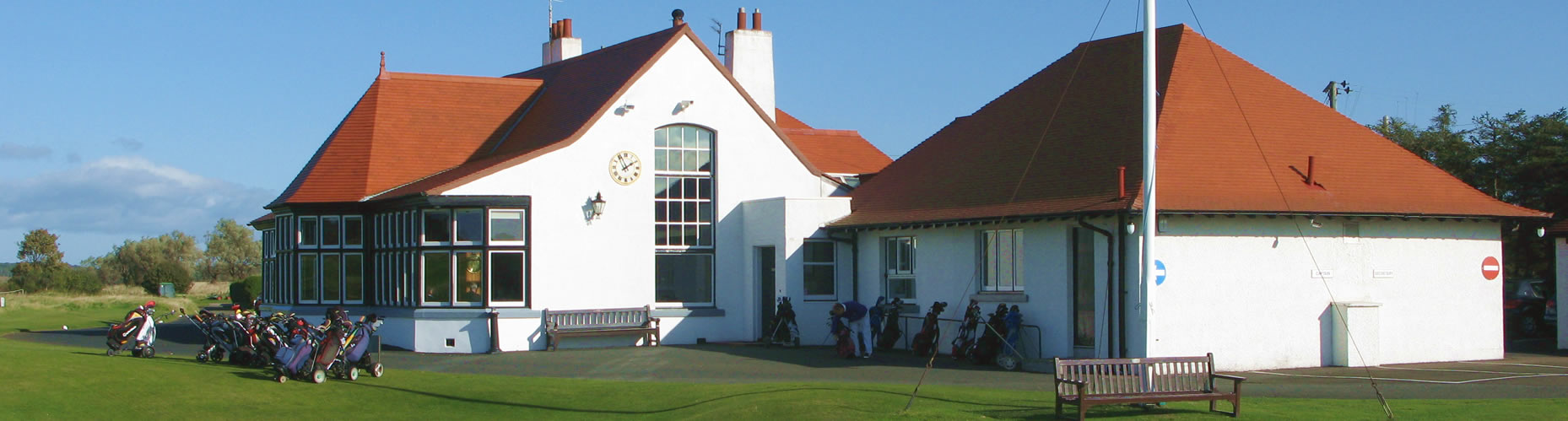
Luffness New Golf Club was founded in 1894, with its course expertly designed by the legendary Old Tom Morris.
However, the history of golf in the area dates back much further. The original “Old” Luffness course was established in 1867 on land to the west and north of the current layout, around the back of Gullane Hill, spanning Luffness Estate and Gullane Common. Golf is believed to have been played in the Aberlady area as early as the 16th century.
In 1893, a dispute arose over the playing of golf on Gullane Common. As a result, in 1894, Mr. Henry Hope, owner of Luffness Estate, decided to create a new course entirely within his estate. This led to the formation of Luffness New Golf Club and the establishment of the course in its present location. The original Luffness Golf Club later relocated westward, closer to Aberlady, and became Kilspindie Golf Club.
The club’s rich history is detailed in the centenary book One Hundred Years at Luffness New – 1894 to 1994. In 2019 the club celebrated its 125th anniversary, and to commemorate the occasion, club member Dr. Hector Chawla was commissioned to write an updated history, which is now available for purchase from the Club Office for £10.
Freddie Tait
Frederick Guthrie Tait, known as F.G. Tait, was a celebrated Scottish amateur golfer and national hero of the late 19th century. Born in Edinburgh in 1870, Tait quickly rose to prominence in the golfing world with a bold, aggressive style and immense power off the tee — qualities that made him stand out during the era of gutta-percha balls and hickory shafts.
He won the Amateur Championship twice (1896 and 1898) and was a three-time runner-up, earning admiration both for his skill and sportsmanship.
Tait had a close connection with Luffness New Golf Club, founded in 1894 near Gullane, East Lothian, not far from his family home.
The course was designed by Old Tom Morris after a disagreement led local members to break away from the original Luffness Golf Club. Tait was a regular and founder member of Luffness New and played a key role in its early popularity. His presence elevated the club’s status as a hub of competitive golf in East Lothian.
Known for his military service as much as his golf, Tait joined the Black Watch and served with distinction. Tragically, he was killed in action during the Second Boer War in 1900 at the age of 30. His death was mourned across Britain, and a memorial was erected in his honour at Luffness New, where his legacy is still deeply felt.
F.G. Tait’s life combined the spirit of Victorian sportsmanship and patriotism, and his story remains woven into the fabric of Luffness New and Scottish golf history.
Luffness New – Designed by Tom Morris
Old Tom Morris, born in St Andrews, Scotland in 1821, is a towering figure in the history of golf. Known as the “Grand Old Man of Golf,” he was instrumental in shaping the sport during its formative years. Morris began his career as an apprentice to Allan Robertson, considered the first professional golfer. Together, they set standards for golf equipment and play, with Morris becoming one of the earliest champions of the game.
In 1860, Morris played in the first Open Championship, a tournament he would go on to win four times (1861, 1862, 1864, 1867). At 46, he remains the oldest winner of the Open. His influence extended beyond playing he was a master greenkeeper, clubmaker, and course designer. He helped develop and popularise many aspects of course maintenance, such as top-dressing greens with sand, and was responsible for designing or improving over 75 golf courses, including Prestwick, Muirfield, Carnoustie , and of course Luffness New.
Morris returned to St Andrews in 1865 as the greenskeeper and professional at the Old Course, transforming it into the revered layout it is today. He also mentored his son, Young Tom Morris, who became a golfing legend in his own right before his untimely death at 24.
Old Tom Morris died in 1908 at the age of 87. His legacy endures in the very fabric of modern golf — through its courses, its competitions, and its culture. Few figures have had such a profound and lasting impact on a sport.